Overview
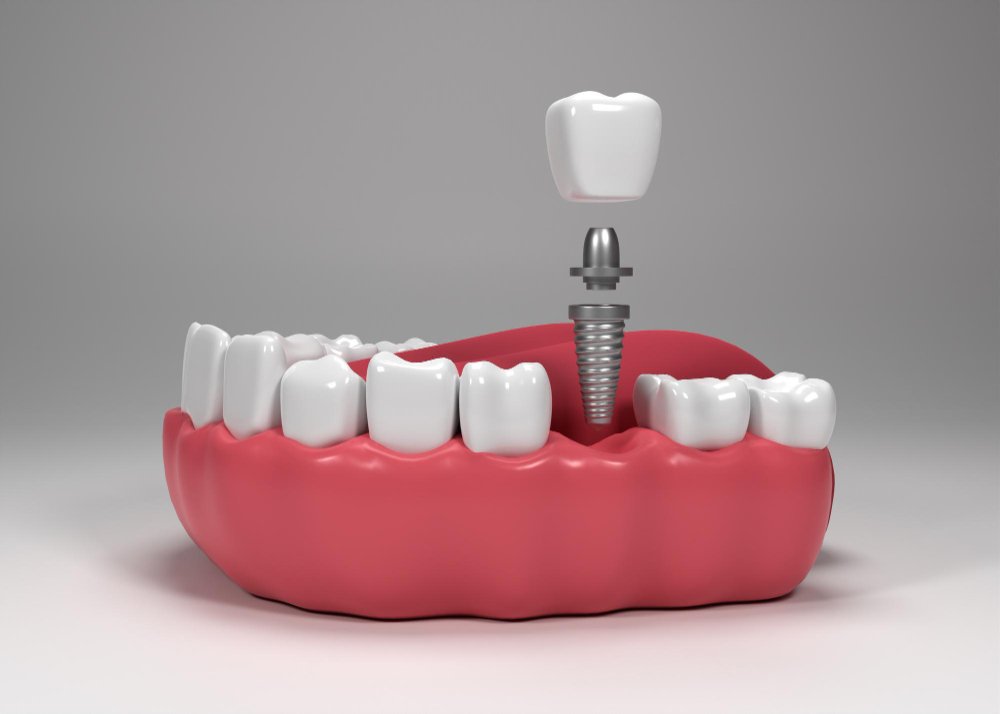
Implants replace missing tooth roots and support fixed teeth.
A dental implant is a small post placed in the jawbone to support a crown, bridge or denture. Implant planning depends on bone volume, gum health, bite, medical history and the number of missing teeth. The goal is a stable replacement that looks and functions like a natural tooth.
Fixed replacementImplants can replace single or multiple missing teeth.
3D planningX-rays or scans help assess bone and implant position.
Long-term supportGood hygiene and regular checkups help protect implant health.
Smile restorationThe final crown is planned for fit, bite and appearance.
Implants may help when you have
- One or more missing teeth
- Loose dentures or difficulty chewing
- Good general health and healed jaw growth
- Enough bone or willingness to consider grafting if needed
- A desire for fixed replacement instead of removable options
Implant treatment journey
- 1Exam and planning
The dentist checks gums, bone, bite and medical history before advising suitability.
- 2Implant placement
The implant is placed under local anaesthesia or suitable comfort measures.
- 3Healing phase
Bone needs time to integrate around the implant before final loading in many cases.
- 4Crown or prosthesis
A crown, bridge or denture is attached after healing and impression planning.
Implant suitability varies. Smoking, uncontrolled diabetes, gum disease or poor bone can affect outcomes and must be discussed.